
Silver and Gold Stamps and Markings
Silver and gold stamps and markings can reveal an item’s properties and history.
We buy all kinds of precious metal items, regardless of whether they have gold stamps and markings, or any at all. You don’t need to know which gold stamp or silver markings are on your items, or what they mean. However, on this page, you can learn about different silver and gold markings that may help you discover several interesting details about your valuables.
All Stamps
Stamps on Jewelry and Silverware
Silver and gold stamps and markings can indicate a valuable item’s worth and origin in several ways. A complete Finnish hallmark series includes five marks: a fineness mark, a maker’s mark, an assay mark, a year mark, and a town mark. However, not all of these marks are mandatory.
When buying gold and silver, the markings that matter most for pricing are the fineness mark and the maker’s mark. The fineness mark helps determine the amount of pure gold or silver in the item. The maker’s mark identifies who made the item, which can influence whether it is purchased, for example, as Kalevala jewelry, design jewelry, or something else.
-
FINENESS MARK
-

MAKER’S MARK
-

ASSAY MARK
-

TOWN MARK
-
YEAR MARK


Fineness mark
In Finland, the shape surrounding the fineness number on hallmarked items indicates which precious metal the item is made of. A gold hallmark (gold stamp) is oval, a silver hallmark is rectangular, a platinum hallmark is diamond-shaped, and a palladium hallmark is a symmetrical quadrilateral.
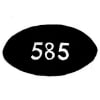
Precious metal fineness is usually expressed in parts per thousand. For example, a fineness mark of 585 means that 585/1000, or 58.5%, of the item’s weight is pure gold. If an item is 18-carat gold, the gold content is 18/24, which equals 750 when expressed in parts per thousand. Gold stamps and markings therefore help determine how much pure 24k gold an item contains. The markings used for silverware and jewelry are the same. For example, a silver fineness mark of 925 means the item is 92.5% silver by weight.
If a piece of jewelry has a fineness mark of 950, it is platinum or palladium. We also buy platinum and palladium jewelry.
-
Gold fineness mark 585
-
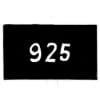
Silver fineness mark 925
-
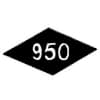
Platinum fineness mark 950
-
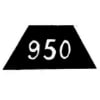
Palladium fineness mark 950


Maker’s mark
A maker’s mark identifies the manufacturer of the item. Often, the maker’s mark is simply a combination of letters. We buy jewelry from, among others, the following makers for design jewelry.
-
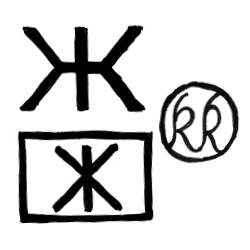
Kalevala koru
-
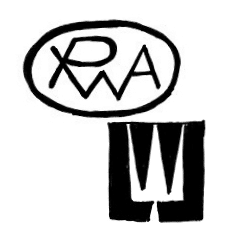
Lapponia
-

Kupittaan Kulta
-

Turun Hopea
-

Kaunis koru
-

Kultaseppä Salovaara
-

Kultateollisuus


Assay Mark
In the Nordic countries and Estonia, precious metal markings are fairly consistent. The easiest way to identify an item’s country of origin is by looking at the assay mark.
An assay mark, which indicates the authenticity of precious metal, is an important element in precious metal trading. In Finland, the assay mark is a heart-shaped crown stamp, while other countries use their own assay marks. If a precious metal item has the crown stamp, it indicates that an impartial assay office approved and supervised by Tukes has examined the product.
-

Finland
-

Sweden
-

Norway
-

Denmark
-

Estonia


Year Mark
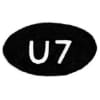
The combination of a letter and a number in the year mark indicates the year the item was made. Try it!
-

Year Mark

Year
–
Town Mark
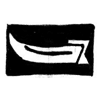
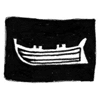
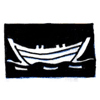
There are different versions of town marks depending on the year the item was made. Below are a few examples of town marks from Helsinki, Turku, and Tampere.
-
Helsinki
-
Helsinki
-
Helsinki
-

Turku
-

Turku
-

Tampere
-

Tampere
-

Tampere
-

Tampere


Gold Stamps and Markings – Identify Gold Purity
The chemical symbol for gold is Au (from the Latin aurum). Pure gold is soft and very yellow. When gold is made into jewelry or other items, other metals are almost always mixed in to make it harder, more practical to use, and more affordable.
Silver mixed into gold can give the alloy a greenish tint, while copper mixed into gold gives it a reddish tone. Reddish-toned gold is often called rose gold or red gold. White gold is also mixed with other metals, such as palladium (almost always in jewelry made in Finland) and nickel (more common in jewelry made abroad), to achieve a lighter color.
Carat is a commonly used traditional term for gold purity. One carat represents one twenty-fourth (1/24) of the total. Gold stamps and markings may be expressed either in parts per thousand or in carats. For example, 14K means the same as 585 parts per thousand—i.e., 58.5% of the alloy is pure gold. The remaining portion consists of alloy metals, usually silver and copper.
The easiest way to determine a piece’s carat value is to look for the gold marking, i.e., the fineness mark. The stamp is usually hidden in a fairly discreet location. In Finland, the fineness mark is always a three-digit number. In gold jewelry purchased abroad, the fineness mark may be missing entirely, or the gold purity may be marked using a carat abbreviation, such as 14k or 18k.
-

24k gold
24-carat gold (999) is pure gold without other alloys. It is very valuable, but also softer and more flexible, which is why it is not always suitable for all types of jewelry.
-
750 gold
750 gold, i.e., 18-carat gold, refers to jewelry that consists of 75% gold. 750 gold is considered a high-quality and valuable option.
-
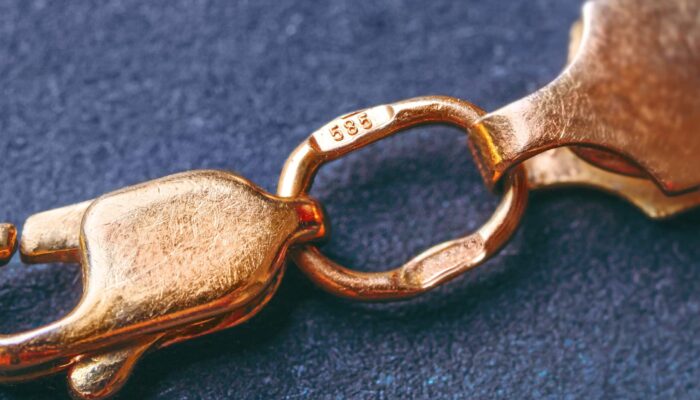
585 gold
585 gold, i.e., 14-carat gold, is the most common purity in Finnish jewelry. A 14K gold stamp means the same as a 585 stamp and is also common in jewelry purchased abroad.
Silver Stamps
The chemical symbol for silver is Ag. Silver purity is expressed in parts per thousand. For example, an item marked 925 means that 92.5% of the alloy is pure silver.
The easiest way to determine silver purity is to look for the fineness mark on the silver item. The stamp is usually hidden in a fairly discreet place. In Finland, the fineness mark is always a three-digit number. Silver purchased abroad may be marked only with the word “sterling” (925 silver). In Finland, the most common silver purity for new jewelry is 925 (sterling silver), while in older Finnish jewelry, the silver content is often 830.

Gold-Plated Items
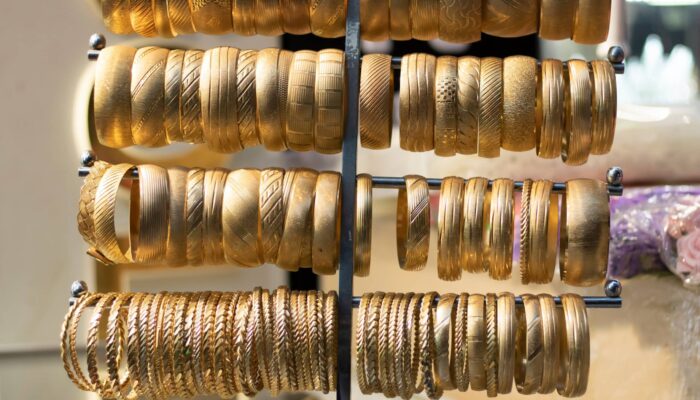
It can be difficult to verify gold authenticity by sight alone. Gold-plated items may not be hallmarked in Finland. However, gold-plated jewelry brought from abroad may include, in addition to a carat number, markings such as:
NICK. FREE, NICK. F, NiFREE, N.F., AM. DOUBLE, AM DBLE, Am.Dbl, A.M., AMERIK, AMERIC, CHAP, CHP, CH, PLORO, PL, Plt, GP, G.E., G.F., ROLLED GOLD, GOLD SHELL, AUREA, PLAQUE.
Nickel Silver and Alpaca
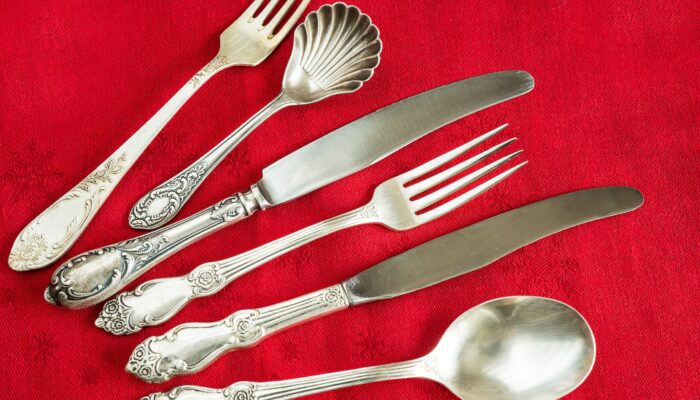
Silver-plated items made of nickel silver or alpaca are sometimes stamped ALP or UH, but most often they have no markings at all. These have very little resale value, so we do not buy them.
A gold-colored piece of jewelry may carry familiar silver purities such as 925 or 830. In that case, it is not gold — it is gold-plated silver.
In addition to this gold and silver hallmarks page, we recommend the Tukes and leimat.fi websites for those interested in gold and silver markings. In addition, Wikipedia provides further information for anyone interested in the subject.
Frequently Asked Questions
Questions About Gold Stamps and Markings?
Yes. Especially older items or items made abroad may be missing official gold stamps and markings. Our experts can still determine the gold content using an X-ray analyzer. While gold markings make identification easier, they are not the only way to verify the authenticity of a precious metal.
Gold stamps and markings are often found in a discreet place, such as the inside of a ring band or the back of a pendant. The markings can be small and worn, so a magnifying glass can be helpful. Sometimes markings are not visible at all, even if the item is genuine gold—especially in older or handmade pieces. In such items, markings may have been removed, for example, when resizing a ring or if the jewelry has been heavily polished. Very small earrings weighing under 1 gram may also lack a gold marking.
Reliable gold markings are official and follow established standards. In Finland, gold products use verified fineness marks and maker’s marks, which are registered in a hallmark register maintained by Tukes. You can therefore find information about official hallmarks, for example, on the Tukes website. If you are unsure about the markings, you can always bring your item to us for evaluation.
Yes. In Finland and many European countries, fineness marks such as 585 or 750 are commonly used. In the United States, carat markings such as 14K or 18K are often used instead. In addition, in Europe, gold markings often include an official assay mark showing that the gold content has been independently verified. Not all countries use assay marks at all, and in some places, the manufacturer’s own marking may be relied upon instead.